psa in the nitrogen generator
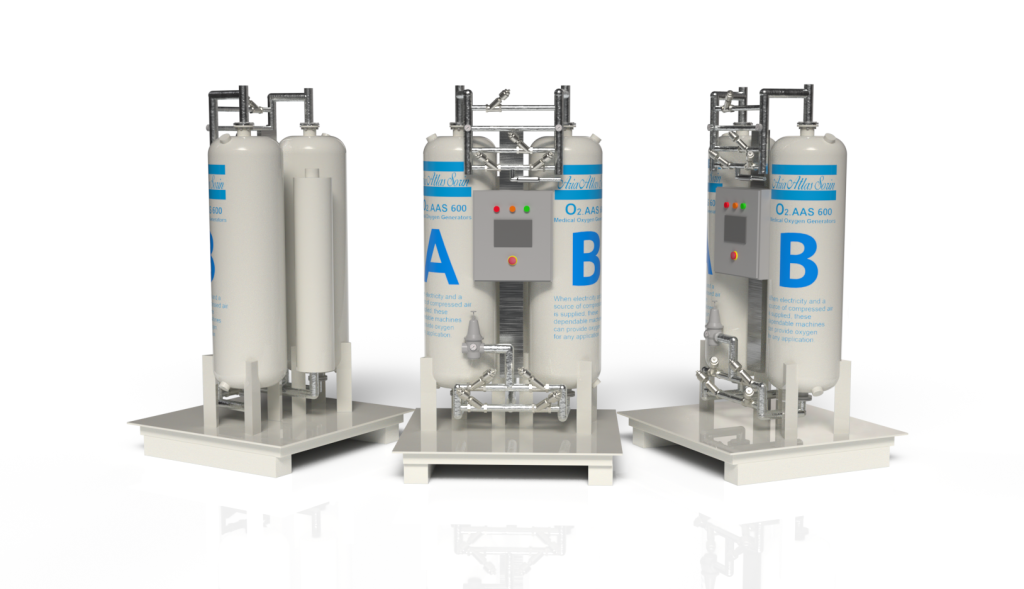
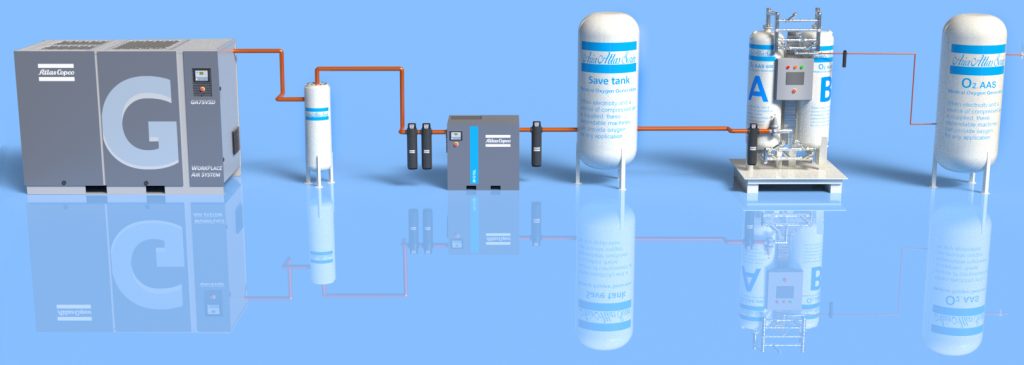
PSA (Pressure Swing Adsorption) nitrogen generator is one of the common methods for producing pure nitrogen. In this method, pressure medium absorption (PSA) process is used to separate nitrogen from air.
The PSA process in the nitrogen generator works as follows:
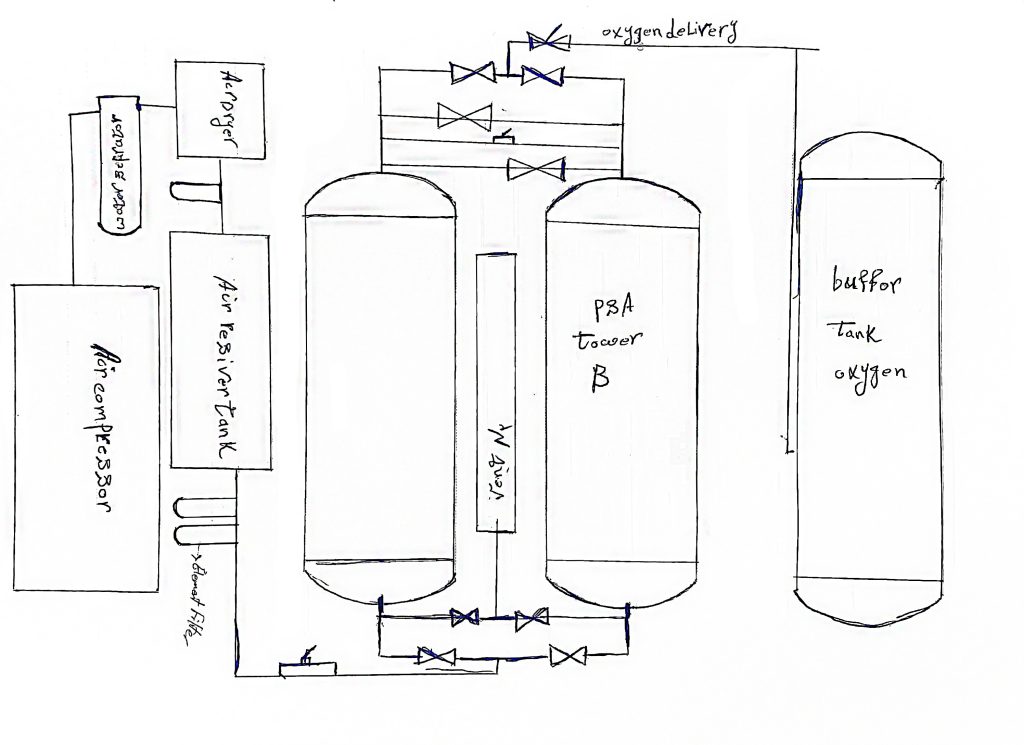
1. Suction: Initially, air is collected from the environment and directed into the PSA unit. Here, the PSA unit consists of two adsorbent beds that operate alternately.
2. Pressing: In this step, the air is compressed to a high pressure using a compressor and enters the absorbent board. In the absorbent board, there is a special absorbent such as zeolite, which has the ability to absorb nitrogen.
3. Separation: When air is compressed to high pressure, nitrogen is absorbed by the absorber and other gases such as oxygen, argon and other mineral gases pass through the absorber and are discharged outside the PSA unit. Absorbed nitrogen is stored in the absorbent board.
4. Drain: After some time, the absorbent board becomes saturated and must be drained. This stage is known as the evacuation stage. For evacuation, the air pressure in the absorber plate is reduced, which causes the absorbed gases (nitrogen) to be released and exit the unit.
5. Changing the boards: after emptying, the absorbent board that was saturated is sent to the board regeneration process to be reusable. In this process, the absorbent board is flushed using a stream of pure nitrogen to remove the absorbed gases during the absorption step and the board is ready for reuse.
These processes are done sequentially and alternately. Dear friend, it seems that the last part of your message has been cut. Please continue your text so that I can respond to you properly.
How does the nitrogen generator work?
The nitrogen generator is used to produce pure nitrogen from the air. Most nitrogen generators use the air distillation process. Here I explain the general process of nitrogen production in a nitrogen generator:
1. Air compression: First, air is collected from the environment and compressed by a piston compressor or saturated piston compressor. This pressure increases to decrease the volume of air. Finally, the air enters at high pressure.
2. Cooler: Air is transferred to the cooler to reduce its temperature. The cooler usually uses a water cooling system to transfer heat from the air through water evaporation and cool the air.
3. Separation of oxygen and other gases: In this step, the cooled air is transferred to a distillation unit. Here, through the distillation process, the air is split into two streams: one stream containing oxygen and other gases and the other stream containing nitrogen.
4. Nitrogen separation: In this step, the flow containing nitrogen is separated from the general flow. Different methods are used for nitrogen separation, including medium pressure absorption method and process membrane method. In the medium pressure absorption method, special adsorbents such as zeolites are used to absorb nitrogen and release other gases such as oxygen and argon. In the process membrane method, nitrogen permeable membranes are used to separate nitrogen.
5. Output of pure nitrogen: The pure nitrogen produced from the nitrogen generator comes out through the output and can be directly supplied to various applications such as electronic industries, manufacturing processes, mining industries, food industry, packaging industry, etc.
Nitrogen generators are used to produce pure nitrogen on an industrial and commercial scale. These devices act as independent nitrogen sources and prevent dependence on external nitrogen supply such as nitrogen cylinders. The advantages of using a nitrogen generator include cost reduction, stable supply of nitrogen, greater safety and better process control.
The important thing to keep in mind is that nitrogen generators produce only pure nitrogen and separate other gases in the air such as oxygen, argon and other suspended substances.